
Drums have been part of human culture for thousands of years. They are found in nearly every civilization and musical tradition. Whether played in a grand concert hall, a lively festival, or a small rehearsal room, drums provide the foundation of rhythm.
For beginners, understanding the various types of drums can feel overwhelming. There are acoustic drum kits, electronic drum kits, orchestral percussion instruments, and traditional world drums. Each type has its own sound, structure, and musical purpose. This guide explains the main categories of drums and where they are commonly used.
Main Categories of Drums in Modern and Traditional Music
Acoustic Drum Kit (Standard Drum Set)
The Acoustic Drum Kit, also known as the standard drum set, is one of the most recognized instruments in modern music. It typically includes a bass drum, snare drum, tom-toms, hi-hats, and cymbals. Played with drumsticks and foot pedals, it allows a drummer to create complex rhythms and dynamic performances.
The acoustic drum kit is widely used in various musical settings:
- Rock and indie gigs
- Jazz clubs
- Pop sessions
- Wedding and function bands
- Theatre productions
In rock and indie gigs, the acoustic drum kit provides powerful beats that drive the energy of the performance. In jazz clubs, drummers use brushes or lighter sticks to create softer and more nuanced rhythms. Pop sessions often require clean and controlled drumming, while wedding and function bands rely on the drum kit to keep the audience dancing. Theatre productions also depend on drum kits to support live performances and musical storytelling.
The acoustic drum kit remains popular because of its versatility and rich sound. However, it can be loud, which makes it less suitable for environments with strict noise restrictions.
Snare Drum (Orchestral & Marching)
The snare drum is one of the most important drums in both orchestral and marching music. It produces a sharp, crisp sound due to the metal wires, known as snares, stretched across the bottom head of the drum.
Snare drums are commonly used in:
- Orchestras
- Theatre pits
- Military bands
- Marching ensembles
In orchestras, the snare drum adds dramatic tension and rhythmic clarity. It is often used in classical compositions and symphonic works. In theatre pits, it supports live performances by adding rhythm and emphasis. Military bands and marching ensembles use snare drums to create strong, precise rhythms that coordinate group movements.
The snare drum requires technical skill and precision. Players must maintain consistent timing and control, especially in marching settings where synchronization is essential.
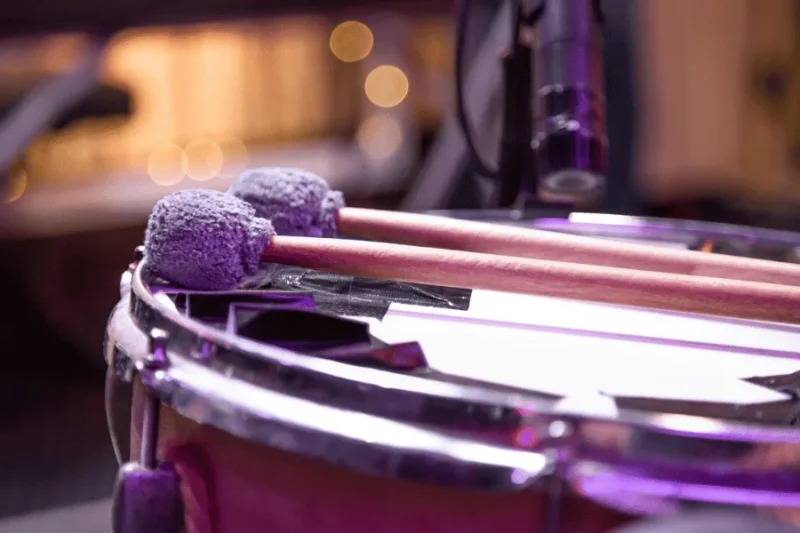
Timpani (Kettle Drums)
Timpani, also known as kettle drums, are large, bowl-shaped drums commonly found in classical music settings. Unlike many other drums, timpani are tuned to specific pitches, allowing them to play melodic patterns in addition to rhythm.
Timpani are mainly used in:
- Symphony orchestras
- Film score performances
- Concert halls
In symphony orchestras, timpani create powerful, dramatic effects. They are often used during climactic moments in classical compositions. Film score performances also rely on timpani to build tension and emotion, especially in action or dramatic scenes. Concert halls frequently feature timpani as part of large orchestral arrangements.
Timpani are played with mallets rather than sticks, and players must carefully tune each drum before a performance. This makes them unique among percussion instruments.
Electronic Drum Kits
Electronic drum kits have become increasingly popular in recent decades. Unlike acoustic kits, electronic drums use rubber or mesh pads connected to a sound module. When struck, the pads trigger digital drum sounds.
Electronic drum kits are commonly used in:
- Small venue noise restrictions
- Studio work
- Church performances
- Rehearsal spaces
In small venues with noise restrictions, electronic kits allow drummers to control volume levels. Studio work benefits from the ability to record clean and adjustable drum sounds. Church performances often use electronic drums to maintain a balanced sound within the worship environment. Rehearsal spaces also favor electronic kits because they reduce noise and allow musicians to practice with headphones.
Electronic drum kits are versatile and practical, especially in modern music production. However, some musicians still prefer the natural resonance of acoustic drums.
Cajón
The cajón is a box-shaped percussion instrument originally from Peru. The player sits on the cajón and strikes its front surface with their hands to produce different tones.
Cajón is widely used in:
- Acoustic sets
- Busking
- Small wedding gigs
- Singer-songwriter performances
The cajón is popular in acoustic performances because it produces both bass and snare-like sounds in a compact form. Busking musicians appreciate its portability. In small wedding gigs and singer-songwriter performances, the cajón provides a subtle rhythm without overpowering other instruments.
Its simplicity makes it ideal for beginners, yet skilled players can create complex rhythms and expressive patterns.
Congas & Bongos
Congas and bongos are hand drums with roots in Afro-Caribbean and Latin American music. Congas are tall, single drums, while bongos consist of two smaller drums connected together.
These drums are central to:
- The Latin music scene
- Afro-Caribbean influence
- Festival culture
In Latin music, congas and bongos create vibrant rhythms that encourage dancing. Afro-Caribbean traditions rely heavily on these instruments for cultural expression and storytelling. Festival culture often features congas and bongos due to their energetic and celebratory sound.
Both instruments are played with the hands, and skilled percussionists use various techniques to produce different tones.
Darbuka (Goblet Drum)
The darbuka, also known as the goblet drum, is a traditional Middle Eastern instrument. It has a goblet-shaped body and produces sharp, resonant tones.
The darbuka is commonly used in Middle Eastern and North African music. It plays a central role in traditional celebrations, weddings, and folk performances. Its fast rhythms and intricate patterns require precision and control.
Modern musicians have also incorporated the darbuka into fusion and world music projects, expanding its global appeal.

Steel Pan (Steel Drum)
The steel pan, often called the steel drum, originated in Trinidad and Tobago. It is made from a metal oil drum that has been carefully shaped and tuned to produce musical notes.
The steel pan is associated with Caribbean music and is widely used in festivals and cultural events. It produces bright, melodic tones that can play both rhythm and harmony.
Steel pan bands are popular in parades and outdoor performances, creating an uplifting and festive atmosphere.
Bodhrán (Irish Frame Drum)
The bodhrán is a traditional Irish frame drum. It is circular and typically played with a small stick called a tipper.
The bodhrán is commonly used in Irish folk music and traditional Celtic performances. It provides a steady rhythmic base for fiddles, flutes, and other folk instruments.
Although simple in appearance, the bodhrán requires skill to control tone and rhythm. It remains a key instrument in Irish cultural heritage.
Choosing the Right Type of Drum
When selecting a drum, beginners should consider several factors:
- Musical style
- Performance setting
- Budget
- Space availability
- Noise level restrictions
For example, someone interested in rock music may prefer an acoustic drum kit, while a person practicing in an apartment might choose an electronic drum kit. A musician drawn to cultural traditions may explore world percussion instruments such as congas, darbuka, or bodhrán.
Understanding the types of drums available helps musicians make informed decisions.
Frequently Asked Questions
What is the best drum for beginners?
An acoustic drum kit or an electronic drum kit is often recommended for beginners interested in modern music. The cajón is also suitable for those seeking a simple and portable option.
Are electronic drums better than acoustic drums?
Electronic drums are quieter and more versatile for recording. Acoustic drums provide a more natural and dynamic sound.
What drums are used in orchestras?
Orchestras commonly use snare drums and timpani.
Which drums are part of world percussion?
Congas, bongos, darbuka, steel pan, and bodhrán are examples of world percussion instruments.
Final Thoughts
Drums are more than just instruments; they are the heartbeat of music. From the powerful acoustic drum kit used in rock and indie gigs to the refined tones of timpani in concert halls, each drum serves a unique purpose. Electronic drum kits offer practical solutions for studios and rehearsal spaces, while world percussion instruments such as the cajón, congas, darbuka, steel pan, and bodhrán represent rich cultural traditions across the globe.
Understanding the different types of drums allows musicians and enthusiasts to appreciate the diversity within acoustic, electronic, and world percussion. Whether performing in jazz clubs, theatre productions, festival culture, church performances, or symphony orchestras, drums continue to shape the rhythm and structure of music in meaningful ways.
For beginners who are inspired to start learning, finding proper guidance can make a significant difference. Searching online for drum tutors near me is often the first practical step toward developing proper technique, timing, and musical confidence. Professional instruction not only accelerates progress but also helps students build a strong foundation, avoid common mistakes, and explore different drumming styles effectively.
By learning about the various types of drums and seeking expert guidance when needed, aspiring drummers can confidently choose the instrument that aligns with their musical interests and goals. With dedication, structured practice, and the support of experienced teachers, anyone can begin their journey into the dynamic and rewarding world of percussion.

London-based freelance drummer and drum tutor with 20 years of experience. Works with bands and students, offers beginner to advanced drum lessons, and is available for live, touring, and studio sessions across multiple genres.


